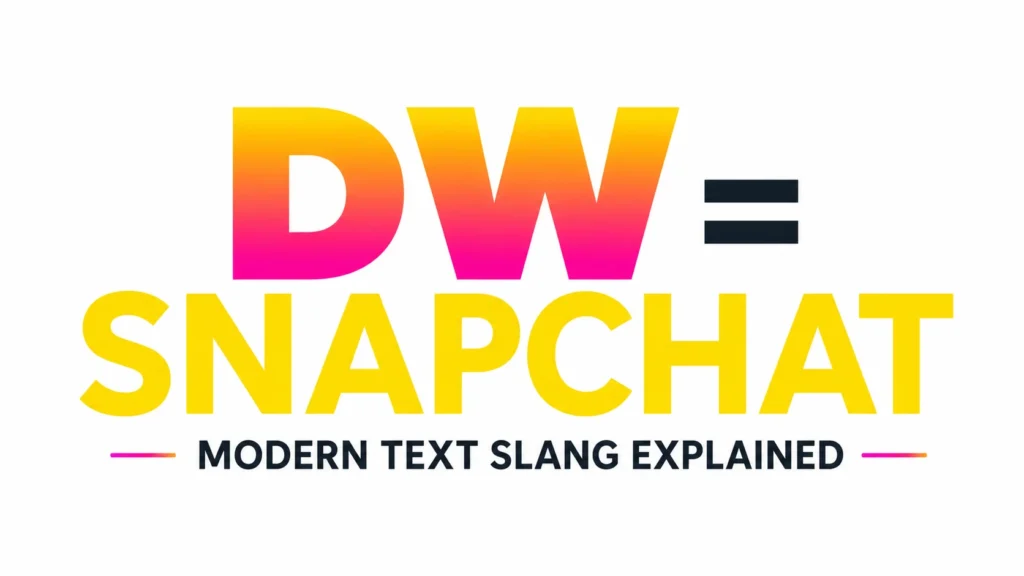
Snapchat slang changes fast, and that is exactly why so many people search for the meaning of “DW.” You might receive a snap, chat message, or streak reply containing those two letters and wonder what the sender actually means.
In most cases, DW means “Don’t Worry.” It is a short and friendly way to reassure someone, reduce stress, or tell another person that everything is fine.
People use DW across Snapchat, texting, Instagram, TikTok, and many other social platforms because it saves time while still expressing comfort and support.
If you have ever seen someone reply with “DW” and felt unsure whether they were being kind, dismissive, or casual, this guide will help you understand the meaning, tone, and proper usage behind this popular abbreviation.
DW Meaning Snapchat – Quick Meaning
On Snapchat, DW stands for “Don’t Worry.”
It is commonly used when someone wants to reassure another person or calm a situation.
Quick Definition
- DW = Don’t Worry
- Used to provide reassurance
- Usually friendly and positive
- Common in chats, snaps, and group conversations
Examples
“DW, I already sent the assignment.”
“DW about yesterday. Everything is okay.”
“DW, I’ll be there in ten minutes.”
The tone is usually supportive, relaxed, and comforting.
Origin & Background
The abbreviation DW emerged from the early days of online messaging and SMS texting. Character limits encouraged people to shorten common phrases into quick abbreviations.
“Don’t Worry” became a natural candidate because it was frequently used in conversations where people wanted to comfort others.
As social media platforms expanded, DW spread rapidly through messaging apps. Snapchat users adopted it because conversations on the platform tend to be fast, casual, and informal.
Over time, the expression became part of internet culture. Many users now recognize DW instantly without even thinking about the full phrase behind it.
Today, DW appears in:
- Snapchat chats
- Instagram messages
- TikTok comments
- WhatsApp conversations
- Online gaming chats
- Text messaging
Its popularity comes from its simplicity. Two letters can quickly communicate reassurance and emotional support.
Real-Life Conversations
WhatsApp Conversation
Andrew:
Hey, I think I sent you the wrong document.
David:
DW, I already downloaded the correct one.
Andrew:
Good, I was worried for a minute.
David:
Everything’s fine.
Instagram DM Conversation
Sarah:
Sorry for replying so late.
Emma:
DW! I’ve been busy too.
Sarah:
Glad you understand.
Emma:
Of course.
TikTok Comment Section
Jake:
I thought this account disappeared.
Mia:
DW, they just changed usernames.
Jake:
That makes sense now.
Text Message Conversation
Ryan:
I might be a few minutes late.
Noah:
DW. I’m still getting ready.
Ryan:
Perfect.
Noah:
See you soon.
These examples show how naturally DW fits into everyday digital conversations.
Emotional & Psychological Meaning
Although DW is short, it carries emotional value.
People often use it to:
- Reduce anxiety
- Ease tension
- Show understanding
- Express patience
- Maintain positive communication
Modern communication happens quickly. Many conversations occur through short messages rather than face-to-face discussions.
A simple “DW” can instantly reassure someone who feels embarrassed, nervous, or stressed.
Imagine forgetting to reply to a friend for several days. You finally apologize, expecting frustration. Instead, they respond with “DW.”
That brief reply may create immediate relief because it signals acceptance rather than judgment.
This emotional function explains why DW remains popular across multiple generations and platforms.
Usage in Different Contexts
Social Media
On Snapchat and Instagram, DW often appears when users want to keep conversations light and friendly.
Example:
“DW, I understood what you meant.”
Friends & Relationships
Friends frequently use DW to comfort each other.
Example:
“DW about the mistake. It happens.”
Romantic partners may also use it to reduce tension after minor misunderstandings.
Work or Professional Settings
DW can appear in workplace chats, though caution is recommended.
Example:
“DW, I’ll handle the report.”
Many professionals prefer writing the complete phrase “Don’t worry” because it sounds more polished.
Casual vs Serious Tone
In casual settings, DW feels natural and friendly.
In serious discussions involving sensitive topics, the abbreviation may appear too brief and could unintentionally seem dismissive.
Context matters more than the letters themselves.
When NOT to Use It
There are situations where DW may not be the best choice.
Serious Emotional Situations
If someone is discussing grief, loss, or a major personal issue, a short abbreviation might feel insufficient.
Professional Documents
Formal emails, reports, and business communications generally benefit from complete wording.
High-Stakes Conversations
Topics involving legal, medical, or financial concerns require clear communication rather than casual abbreviations.
Potential Misunderstandings
Some people may interpret a quick DW as a way to end a conversation rather than offer genuine support.
When emotions are involved, additional context can help.
Common Misunderstandings
Many users assume DW always means exactly the same thing.
That is not entirely true.
It Can Sound Dismissive
If delivered without context, DW may appear like someone is brushing aside concerns.
Tone Depends on Relationship
A close friend saying DW often feels comforting.
A stranger saying DW may feel less reassuring.
Not Always Warm
Some users type DW simply to save time rather than express emotional support.
Literal vs Figurative Meaning
Literally, it means “Don’t Worry.”
Figuratively, it can communicate:
- Relax
- It’s okay
- No problem
- Everything is fine
- I understand
Understanding context helps prevent confusion.
Comparison Table
| Expression | Meaning | Tone | Usage |
|---|---|---|---|
| DW | Don’t Worry | Reassuring | Casual conversations |
| NVM | Never Mind | Neutral | Dropping a topic |
| NP | No Problem | Friendly | Responding to thanks |
| IDC | I Don’t Care | Indifferent | Casual but can sound rude |
| TBH | To Be Honest | Honest | Sharing opinions |
| Relax | Calm down | Direct | Emotional situations |
| No worries | Everything is fine | Warm | Casual and professional |
| Panic | Opposite idea | Negative | Expressing concern |
Key Insight
DW stands out because it combines reassurance with efficiency. Unlike many abbreviations, it often carries a positive emotional message while keeping conversations brief.
Variations & Types
1. DW About It
Means there is no need for concern.
2. DW Bro
Friendly reassurance between friends.
3. DW Girl
Supportive expression often used among close friends.
4. DW Man
Casual version commonly used in texting.
5. DW I’ll Handle It
Shows confidence and responsibility.
6. DW Everything’s Fine
Strong reassurance during uncertainty.
7. DW We Got This
Encourages teamwork and confidence.
8. DW I’m Coming
Used when someone is running late.
9. DW It Happens
Comforts someone after a mistake.
10. DW Seriously
Emphasizes reassurance and sincerity.
How to Respond When Someone Uses It
Casual Replies
- Thanks!
- Good to know.
- Appreciate it.
- Sounds good.
Funny Replies
- Okay, I’ll try not to panic.
- You saved my stress levels.
- Mission accomplished then.
- My worries have officially retired.
Mature Replies
- Thank you for understanding.
- I appreciate your reassurance.
- That means a lot.
- I’m glad we cleared that up.
Respectful Replies
- Thanks for letting me know.
- I appreciate your patience.
- Understood.
- Thank you for the clarification.
Regional & Cultural Usage
Western Culture
DW is widely recognized and frequently used among teenagers and adults. Most users instantly understand it.
Asian Culture
Many English-speaking social media users understand DW, particularly younger generations active online.
Middle Eastern Culture
The abbreviation appears regularly among bilingual internet users who communicate in English.
Global Internet Usage
Gaming communities, social networks, and messaging apps have helped DW become internationally recognized.
Generational Differences
Gen Z
Uses DW naturally and frequently in fast-paced digital conversations.
Millennials
Understand DW well but may alternate between the abbreviation and the full phrase.
Older generations often recognize the meaning but may prefer complete sentences.
Is It Safe for Kids?
Yes.
DW is generally considered safe and harmless for children and teenagers.
The phrase simply means “Don’t Worry” and carries a positive message of reassurance.
Parents should still encourage young users to understand context because tone can vary depending on the conversation.
FAQs
What does DW mean on Snapchat?
DW usually means “Don’t Worry.” It reassures someone that a situation is okay.
Is DW rude?
Not usually. Most of the time it is friendly and supportive.
Can DW have another meaning?
In rare situations, abbreviations can have different meanings, but on Snapchat “Don’t Worry” is the most common interpretation.
Is DW used only on Snapchat?
No. It is widely used on WhatsApp, Instagram, TikTok, gaming platforms, and text messages.
How do I reply to DW?
You can respond with “Thanks,” “Got it,” “Appreciate it,” or another friendly acknowledgment.
Do adults use DW?
Yes. Many adults use it in casual online communication.
Is DW professional?
It is acceptable in informal workplace chats, though writing “Don’t worry” is usually better in formal communication.
Conclusion
DW is one of the simplest yet most meaningful abbreviations used on Snapchat and other messaging platforms. In most situations, it stands for “Don’t Worry” and serves as a quick way to reassure someone, reduce tension, or show understanding.
Its popularity comes from its ability to communicate comfort in just two letters. Whether you see it in a Snapchat chat, a WhatsApp message, an Instagram DM, or a text conversation, the intention is usually positive.
Understanding DW allows you to navigate modern digital communication with greater confidence. The next time someone sends you “DW,” you’ll know they are most likely trying to put your mind at ease rather than create confusion.