If you’ve ever received a message that simply says “TY”, you may have wondered whether it stands for something more than two letters. It’s one of the most common texting abbreviations, yet many people search for its meaning after seeing it in a chat, social media comment, or online game.
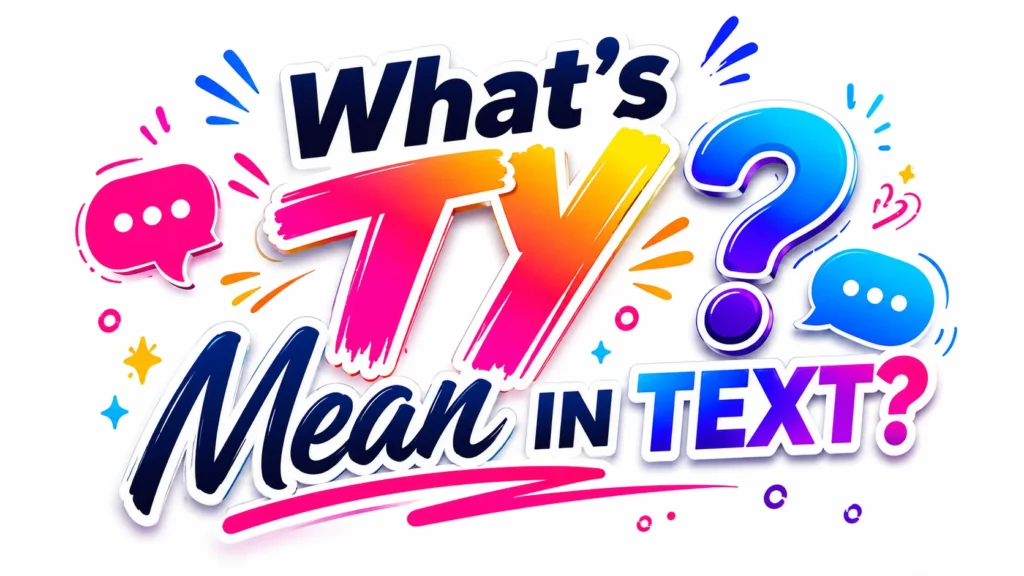
In most situations, TY simply means “Thank You.” It’s a quick and friendly way to express appreciation without typing the full phrase. Whether someone is thanking you for a favor, a compliment, or useful information, this abbreviation helps keep conversations fast and natural.
People often search for It because the abbreviation can appear in different contexts. Understanding how it’s used makes digital conversations easier to follow and helps you reply appropriately.
Quick Meaning
TY stands for “Thank You.”
It’s a casual abbreviation used to show gratitude in text messages, social media, online games, and messaging apps.
Common meanings include:
- Thank you
- Thanks
- I appreciate it
- Much appreciated
Examples
“TY for helping me today.”
“TY! That was exactly what I needed.”
“TY for the reminder.”
Although it’s informal, TY is considered polite and friendly.
Origin & Background
The abbreviation TY became popular during the early days of internet chat rooms, online forums, and SMS texting. At a time when mobile phones had character limits and slower keyboards, shortening common phrases made communication faster.
“Thank you” was one of the expressions people used most often, so reducing it to TY felt natural.
As social media platforms expanded, the abbreviation spread quickly. Snapchat, Instagram, Facebook Messenger, Discord, WhatsApp, and online multiplayer games all contributed to its popularity.
Today, TY is recognized across many countries. Even people learning English often encounter it early because it’s simple, polite, and easy to remember.
Real-Life Conversations
Andrew:
I sent you the presentation.
David:
TY! You saved me a lot of time.
Instagram DM
Andrew:
Loved your latest photo!
David:
TY! That means a lot.
TikTok Comments
Andrew:
TY for sharing this tutorial.
David:
Happy it helped!
Text Message
Andrew:
Your package arrived safely.
David:
TY for letting me know.
Emotional & Psychological Meaning
Although TY is only two letters, it carries genuine emotional value.
Expressing gratitude strengthens relationships, whether the conversation happens in person or through a screen. A quick thank-you lets someone know their effort has been noticed.
Using TY also creates a friendly atmosphere. It encourages positive interactions and reminds others that small acts of kindness matter.
I remember helping a friend prepare for an interview by reviewing their résumé. Later that evening, I received a simple message that read, “TY for everything today.” It wasn’t a long response, but it felt sincere because appreciation doesn’t always require many words.
That emotional simplicity explains why TY remains one of the internet’s most frequently used abbreviations.
Usage in Different Contexts
Social Media
TY appears regularly in comments, captions, replies, and direct messages.
Examples include:
“TY for all the support.”
“TY everyone for the birthday wishes.”
Creators often use it to thank followers after reaching milestones.
Friends & Relationships
Friends use TY after receiving help, advice, gifts, or encouragement.
Partners may also send TY to express appreciation for thoughtful gestures or emotional support.
Its short form keeps conversations relaxed while still showing respect.
Work or Professional Settings
TY can be acceptable in quick internal chats between coworkers when the workplace culture is informal.
For business emails, client communication, or official documents, writing “Thank you” in full is usually the better choice.
Complete wording appears more polished and professional.
Casual vs Serious Tone
TY works best in casual conversations where abbreviations are common.
Formal communication benefits from complete sentences because they reduce ambiguity and create a stronger professional impression.
Matching your language to the situation shows thoughtful communication.
When NOT to Use It
Although TY is polite, there are situations where the abbreviation isn’t the best choice.
Avoid using it in:
- Job applications
- Formal business emails
- Academic assignments
- Official letters
- Legal communication
- Professional presentations
Some people, especially those unfamiliar with internet slang, may find the abbreviation too informal.
When writing to someone you don’t know well, spelling out “Thank you” demonstrates extra care and respect.
Common Misunderstandings
Most people correctly understand TY as “Thank You,” but confusion occasionally happens.
Some assume it’s the name of a person or an organization when they first encounter it.
Others believe abbreviating gratitude sounds less sincere.
In reality, sincerity depends more on the conversation than the number of letters used. A thoughtful TY often feels just as genuine as writing the complete phrase.
Context also matters.
“TY!” expresses appreciation.
“TYSM!” adds stronger enthusiasm.
Understanding these differences helps interpret the speaker’s emotion more accurately.
Comparison Table
| Expression | Meaning | Common Usage |
|---|---|---|
| TY | Thank You | Casual appreciation |
| Thanks | Standard gratitude | Everyday conversations |
| TYSM | Thank You So Much | Strong appreciation |
| Thx | Thanks | Informal texting |
| TIA | Thanks In Advance | Before receiving help |
| NP | No Problem | Response to thanks |
| You’re Welcome | Reply to gratitude | Formal and informal |
| IDC | I Don’t Care | Opposite emotional tone |
Key Insight
TY is more than a shortcut. It reflects appreciation while matching the fast pace of digital communication. Even brief expressions of gratitude help create warmer and more respectful conversations.
Variations & Types
1. TY
The standard abbreviation for “Thank You.”
2. TYSM
Means “Thank You So Much” and expresses stronger appreciation.
3. Thx
A widely used shortened version of “Thanks.”
4. Thanks
The complete informal expression.
5. Thank You
The full phrase suitable for every situation.
6. Many Thanks
A polite alternative with a slightly warmer tone.
7. Thanks a Lot
Shows greater appreciation depending on context.
8. Much Appreciated
A respectful way to acknowledge someone’s effort.
9. Appreciate It
A conversational expression of gratitude.
10. Big Thanks
An enthusiastic phrase often seen on social media.
How to Respond When Someone Uses It
Casual Replies
- You’re welcome.
- No problem.
- Anytime.
- Happy to help.
Funny Replies
- Payment accepted in pizza.
- You owe me snacks.
- I’ll remember this favor.
- That’s what friends are for.
Mature Replies
- I’m glad I could help.
- It was my pleasure.
- Anytime you need assistance.
- Wishing you the best.
Respectful Replies
- You’re very welcome.
- Happy to assist.
- I appreciate your kind words.
- It was no trouble at all.
Regional & Cultural Usage
Western Culture
TY is widely recognized across the United States, Canada, the United Kingdom, Australia, and other English-speaking countries. It’s especially common in texting and social media.
Asian Culture
Many English learners understand TY through online communication, gaming communities, and international social platforms. Full phrases remain more common in formal settings.
Middle Eastern Culture
Young internet users often recognize TY, particularly those active on global social media. Professional communication usually favors writing “Thank you” in full.
Global Internet Usage
TY has become one of the most universal English abbreviations because gratitude is expressed in nearly every online community, regardless of location.
Gen Z vs Millennials
Gen Z frequently uses TY alongside other texting abbreviations.
Millennials understand it well but may choose the complete phrase more often in professional conversations.
Is It Safe for Kids?
Yes.
TY is considered one of the safest texting abbreviations because it simply means “Thank You.”
It encourages polite communication and positive online interactions. Parents can also remind children that abbreviations are appropriate for casual conversations, while school assignments and formal writing should use complete language.
Learning when to switch between informal and formal communication is a valuable digital skill.
FAQs
What does TY mean in text?
TY stands for “Thank You.” It’s a short way of expressing gratitude.
Is TY the same as thanks?
Yes. Both communicate appreciation, although TY is an abbreviation.
Is TY rude?
No. It’s generally viewed as polite and friendly.
Can I use TY in work emails?
It’s better to write “Thank you” in full when communicating professionally.
What does TYSM mean?
TYSM stands for “Thank You So Much.” It expresses stronger appreciation.
Is TY popular on social media?
Yes. It’s commonly used on Snapchat, Instagram, TikTok, WhatsApp, Discord, and many other messaging platforms.
Should kids use TY?
Yes. It’s a positive abbreviation that promotes polite communication when used appropriately.
Conclusion
If you’ve been wondering, the answer is refreshingly simple. In almost every casual online conversation, TY stands for “Thank You.” Those two letters carry genuine appreciation while helping conversations stay quick and natural.
Knowing its meaning makes texting, gaming, and social media interactions easier to understand. It also reminds us that kindness doesn’t depend on the length of a message. Even a brief expression of gratitude can strengthen relationships and leave a positive impression.
Use TY confidently with friends, classmates, and family, while remembering that complete wording remains the better choice for formal communication.