If you’ve ever received a message ending with “TTYL,” you probably paused for a second and wondered what the sender actually meant. Was it friendly? Dismissive? Casual? Serious? That small abbreviation can carry different emotional tones depending on the conversation.
Text messaging has changed the way people communicate. Short expressions now replace full sentences, especially during fast-moving chats on phones and social media. “TTYL” became popular because it saves time while still sounding warm and personal.
Many people search for this phrase after seeing it in texts, TikTok comments, Instagram DMs, or gaming chats. Some assume it means goodbye forever. Others think it sounds cold. In reality, the meaning is much more relaxed and socially comforting.
Understanding how “TTYL” works helps you read conversations more naturally and avoid awkward misunderstandings online.
TTYL – Quick Meaning
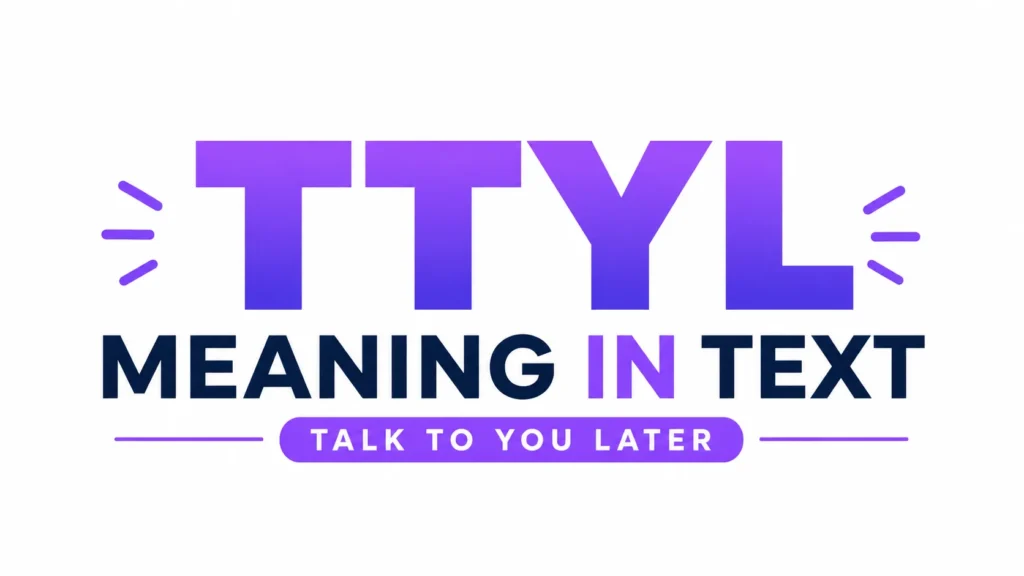
“TTYL” stands for:
Talk To You Later
People use it when ending a conversation temporarily while expecting to speak again soon.
Common Meanings
- Friendly goodbye
- Temporary pause in conversation
- Casual sign-off
- Soft way to leave a chat
Simple Examples
“I’m heading into class now. TTYL.”
“Dinner’s ready lol ttyl.”
“I need sleep immediately. TTYL tomorrow.”
The phrase usually sounds light, informal, and reassuring.
Origin & Background
“TTYL” became popular during the early internet and mobile texting era in the late 1990s and early 2000s.
At that time, texting had strict character limits. Typing full sentences on old mobile keyboards felt painfully slow. Internet chatrooms, MSN Messenger, Yahoo Messenger, and AOL Instant Messenger encouraged shorter communication styles.
People started creating abbreviations like:
- BRB
- LOL
- OMG
- IDK
- TTYL
Among these expressions, “TTYL” stood out because it added emotional warmth. It ended conversations without sounding abrupt.
The phrase quickly spread into teenage culture, online gaming communities, and eventually mainstream social media. By the late 2000s, almost everyone using digital messaging recognized it instantly.
Its popularity grew because it matched the rhythm of modern communication. Conversations no longer had clear endings. People moved in and out of chats throughout the day.
“TTYL” became the perfect phrase for that behavior.
Today, the expression appears across:
- Text messages
- Snapchat
- TikTok
- Instagram DMs
- Discord
- Gaming chats
Even though newer slang constantly appears online, “TTYL” remains surprisingly timeless.
Real-Life Conversations
WhatsApp Conversation
Andrew:
You still coming to the movie tonight?
David:
Yeah probably. Just finishing work first.
Andrew:
Alright, text me when you leave.
David:
Will do. TTYL.
Instagram DM
Sophia:
That vacation photo looked unreal honestly.
Mia:
Thank you. I already miss the beach.
Sophia:
Same. We seriously need another trip.
Mia:
Absolutely. TTYL, my phone’s dying.
TikTok Comments
Jordan:
Why am I watching cooking videos at 2 a.m. again?
Emily:
Because sleep is optional apparently.
Jordan:
True lol ttyl before I order snacks online.
Text Message
Chris:
Grandma’s finally feeling better today.
Lena:
That’s such good news honestly.
Chris:
Yeah, everyone feels relieved now.
Lena:
I’m glad. TTYL after work.
Emotional & Psychological Meaning
At first, “TTYL” seems like a basic internet shortcut. Emotionally, though, it does something important.
It softens endings.
Human beings naturally dislike abrupt disconnection. A conversation ending with only “bye” can sometimes feel distant or cold. “TTYL” creates emotional continuity instead.
It quietly says:
- “I enjoy talking with you.”
- “This conversation isn’t over forever.”
- “We’ll reconnect later.”
- “You still matter to me.”
That subtle reassurance explains why the phrase survived for decades online.
In friendships, “TTYL” often carries warmth without sounding overly emotional. In relationships, it can feel comforting and affectionate. Among coworkers, it keeps communication friendly while staying professional.
I once noticed how differently two messages felt during a stressful week.
One person texted:
“Busy.”
Another texted:
“Busy right now, ttyl.”
The second message felt noticeably kinder, even though both meant the same thing.
Tiny language choices shape emotional experience more than people realize.
Usage in Different Contexts
Social Media
On social platforms, “TTYL” appears casually during conversations, livestream comments, and DMs.
People use it when:
- Leaving chats
- Ending discussions
- Signing off streams
- Pausing conversations
The tone usually feels relaxed and friendly.
Friends & Relationships
Among friends, the phrase creates closeness without effort.
Example:
“I’m about to nap lol ttyl.”
It sounds casual while still maintaining connection.
In romantic conversations, it can feel affectionate when paired with emojis or warm language.
Example:
“Goodnight ❤️ ttyl tomorrow.”
Work & Professional Settings
Using “TTYL” at work depends heavily on workplace culture.
In casual team chats, it may sound approachable and human.
Example:
“Jumping into another meeting. TTYL.”
In formal corporate emails, though, the abbreviation may seem too informal.
Professional environments usually prefer:
- “Speak soon”
- “Talk later”
- “Looking forward to reconnecting”
Casual vs Serious Tone
Casual Use
- Friendly chats
- Gaming
- Group messages
- Social media conversations
Serious Use
The phrase becomes less appropriate during:
- Emotional conflicts
- Formal discussions
- Sensitive news
- Important business communication
Tone matters more than the actual abbreviation.
When NOT to Use It
Although “TTYL” is generally harmless, certain situations require more thoughtful communication.
During Emotional Conversations
If someone shares grief, anxiety, or serious personal struggles, ending with “TTYL” can feel emotionally detached.
A more caring response may work better.
Formal Workplace Communication
Using internet slang with clients, executives, or professional contacts can appear immature depending on industry culture.
Not every workplace embraces casual texting language.
Sensitive Cultural Contexts
Some cultures value highly formal communication. Casual abbreviations may seem disrespectful in professional or family settings.
During Conflict
If someone is upset, abruptly typing “TTYL” may appear dismissive or avoidant.
Context changes interpretation dramatically.
Common Misunderstandings
One common misunderstanding is assuming “TTYL” always sounds friendly.
Sometimes the tone changes based on punctuation and timing.
For example:
“Okay. TTYL.”
This can feel neutral.
Meanwhile:
“Fine ttyl.”
May sound annoyed or emotionally distant.
Another confusion comes from generational differences. Younger users often see internet abbreviations as normal communication. Older users may interpret them as lazy or impersonal.
Some people also mistake “TTYL” as permanent goodbye language. In reality, it usually suggests temporary separation.
The emotional tone depends on:
- Relationship
- Timing
- Writing style
- Conversation context
Comparison Table
| Expression | Meaning | Tone | Common Usage |
|---|---|---|---|
| TTYL | Talk to you later | Friendly | Texting/social media |
| BRB | Be right back | Temporary pause | Chats/gaming |
| GTG | Got to go | Quick exit | Casual texting |
| Bye | Goodbye | Neutral | Universal |
| CU | See you | Informal | Older texting slang |
| Talk soon | Speak again later | Warm/professional | Personal & work |
| GN | Good night | Affectionate | Evening chats |
Key Insight
“TTYL” became popular because it balances speed with emotional connection. It ends conversations gently while keeping relationships socially open and comfortable.
Variations & Types
1. TTYL
Classic version meaning “Talk to you later.”
2. ttyl
Lowercase style that feels softer and more casual.
3. TTYL ❤️
Adds warmth or affection.
4. ttyl lol
Playful version used after jokes or funny chats.
5. ttyl tomorrow
More specific timing for reconnecting.
6. ttyl bestie
Common among close friends online.
7. ttyl bro
Casual version often used in gaming or male friendships.
8. ttyl babe
Romantic or flirtatious variation.
9. ttyl after class
Practical version explaining temporary absence.
10. TTYL everyone
Group-chat sign-off.
How to Respond When Someone Uses It
Casual Replies
- “Alright talk soon.”
- “Later.”
- “Sounds good.”
- “Catch you later.”
Funny Replies
- “Only if snacks are involved.”
- “Don’t disappear forever.”
- “I’ll survive somehow.”
- “Try not to forget me.”
Mature Replies
- “Take care.”
- “Hope your day goes smoothly.”
- “Talk soon.”
- “Looking forward to catching up later.”
Respectful Replies
- “Thanks for checking in.”
- “Have a good evening.”
- “Wishing you a productive day.”
- “Speak later.”
Regional & Cultural Usage
Western Culture
In Western countries, “TTYL” is widely viewed as casual and friendly.
It appears naturally in:
- Friend groups
- Family chats
- Dating conversations
- Gaming communities
The phrase often sounds relaxed rather than formal.
Asian Culture
Many younger Asian internet users understand the abbreviation through global social media culture.
Still, highly respectful communication styles remain important in some settings, especially with elders or authority figures.
Middle Eastern Culture
Online slang is common among younger generations, particularly in bilingual digital spaces.
Family-centered communication may influence how casually abbreviations are used with older relatives.
Global Internet Usage
“TTYL” became part of universal internet language because English-based slang spread rapidly across apps and online communities.
Even non-native English speakers often recognize it immediately.
Gen Z vs Millennials
Gen Z
- Uses abbreviations more ironically
- Mixes slang with memes and emojis
- Prefers relaxed lowercase texting styles
Millennials
- Grew up during the rise of texting abbreviations
- Use “TTYL” more literally
- Associate it with MSN Messenger and early texting culture
Generational experience shapes emotional interpretation.
Is It Safe for Kids?
Yes, generally.
“TTYL” is considered safe because it simply means “Talk to you later.”
Parents should still encourage healthy digital habits. Children may use abbreviations constantly without understanding tone, context, or emotional impact during conversations.
Teaching respectful communication matters more than policing harmless slang.
FAQs
What does TTYL mean in texting?
It means “Talk to you later.” People use it as a friendly way to end conversations temporarily.
Is TTYL rude?
Usually no. The tone is generally casual and warm unless used during tense conversations.
Can adults use TTYL?
Absolutely. Many adults still use it in casual digital communication.
Is TTYL outdated?
Not really. While newer slang exists, the phrase remains widely understood online.
What’s the difference between TTYL and BRB?
“TTYL” means ending the conversation for now. “BRB” means returning very soon.
Can TTYL sound flirtatious?
Yes, depending on emojis, tone, and relationship context.
Is TTYL appropriate for work?
Only in informal workplace chats. Formal communication usually avoids texting abbreviations.
Conclusion
“TTYL” may be short, yet it carries a surprisingly human purpose in digital communication. It helps conversations end gently instead of abruptly.
For decades, people have used the phrase to maintain connection while stepping away from chats, messages, and online discussions.
Its lasting popularity comes from emotional simplicity. The phrase quietly reassures others that the relationship continues beyond the moment.
Understanding how and when to use “TTYL” makes online communication feel smoother, warmer, and more natural.
And once you recognize the emotional meaning behind it, the phrase feels much more personal than just four small letters.