If you spend time on TikTok, Snapchat, Instagram, or text messaging apps, you’ve probably seen someone write “ASF” at the end of a sentence. For many people, the first reaction is confusion. Is it an insult? A joke? A shortcut for something inappropriate?
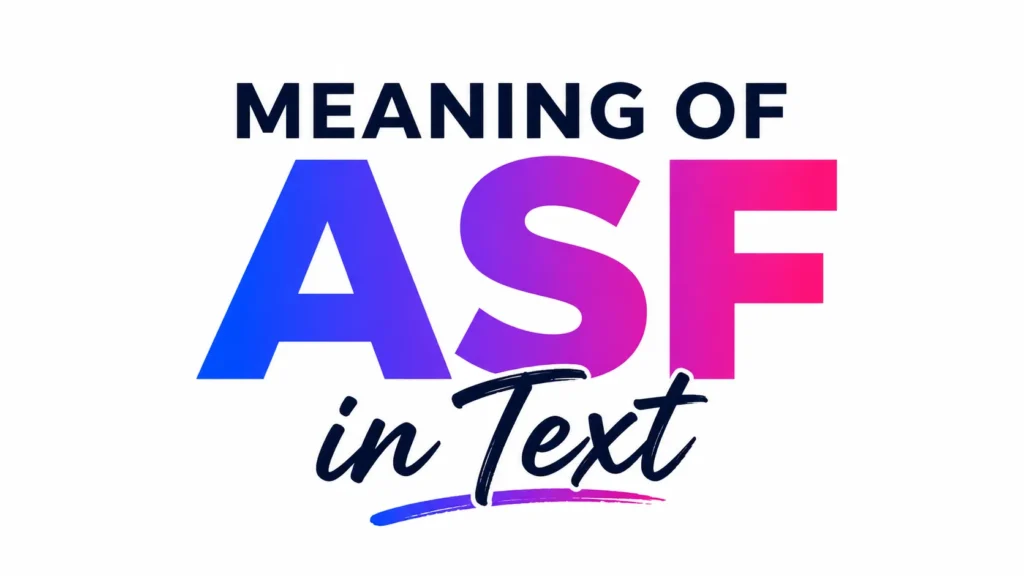
The meaning of ASF in text is actually simple once you understand the context. It’s one of those internet slang terms that adds emotional intensity to a sentence. People use it to emphasize feelings, opinions, reactions, or experiences in a fast and expressive way.
Modern texting culture moves quickly. Short abbreviations help people sound casual, emotional, and relatable without typing long explanations. ASF became popular because it feels direct, exaggerated, and emotionally charged at the same time.
This guide explains what ASF means, where it came from, how people use it online, and when you should avoid using it. You’ll also see realistic conversations, cultural differences, and common misunderstandings so you can confidently understand the slang in real-life situations.
ASF – Quick Meaning
ASF usually means:
“As F*ck”
It’s used to add strong emphasis to a sentence.
People often attach it to emotions or descriptions like:
- Funny ASF
- Tired ASF
- Cute ASF
- Loud ASF
- Busy ASF
In simple terms, it means:
- “very”
- “extremely”
- “really”
Quick Examples
“I’m hungry ASF right now.”
“That movie was sad ASF.”
“Your outfit looks good ASF.”
The phrase is informal and mostly used online or in casual conversations.
Origin & Background
ASF grew from internet shorthand culture during the rise of texting and social media. The longer expression “as f*ck” had already existed in spoken English for years. People used it to intensify descriptions in everyday speech.
As texting became faster, users shortened phrases to save time. “As f*ck” gradually turned into “AF,” and later many people started typing “ASF” because it sounded smoother in conversation and matched spoken slang rhythms.
Social media platforms helped spread it rapidly:
- Twitter popularized short emotional slang.
- TikTok pushed expressive reactions into mainstream culture.
- Snapchat and Instagram normalized casual abbreviations among younger users.
Over time, ASF stopped feeling shocking to many internet users. It became more about emotional exaggeration than profanity itself.
Younger generations especially use slang like ASF to create personality online. It helps messages feel more expressive, dramatic, and emotionally alive.
Real-Life Conversations
WhatsApp Conversation
Andrew:
Bro, this weather is hot ASF today.
David:
I know. I stepped outside for two minutes and already regret it.
Instagram DM
Sophia:
Your vacation pictures look beautiful ASF.
Mia:
Thank you. I honestly didn’t want to come back home.
TikTok Comments
Ethan:
This song is addictive ASF.
Lena:
I’ve replayed it all week.
Text Message
Marcus:
I’m nervous ASF about tomorrow’s interview.
Daniel:
That’s normal. You prepared for it already.
Emotional & Psychological Meaning
ASF is more than internet slang. It reflects how people communicate emotion digitally.
Text messages often lack tone, facial expressions, and body language. Slang fills that emotional gap. Adding ASF makes a sentence feel stronger, louder, and more personal.
For example:
“I’m tired” sounds neutral.
“I’m tired ASF” sounds emotionally real and relatable.
People use it because they want reactions to feel immediate and authentic. It creates emotional intensity without needing long explanations.
In many online spaces, exaggerated language also helps people bond socially. Shared slang creates familiarity and belonging.
I once saw a student text, “I’m stressed ASF before exams,” in a group chat. Everyone instantly understood the emotional weight behind it. Nobody needed extra details. The slang itself carried the feeling.
That’s why abbreviations like ASF spread so quickly. They communicate emotion efficiently.
Usage in Different Contexts
Social Media
ASF appears constantly on:
- TikTok captions
- Instagram comments
- Snapchat stories
- YouTube replies
- Twitter posts
People use it for humor, excitement, frustration, admiration, or exaggeration.
Example:
“This filter is cute ASF.”
Friends & Relationships
Among friends, ASF feels casual and emotionally expressive.
It can show:
- excitement
- attraction
- annoyance
- support
- stress
Example:
“I miss you ASF.”
In relationships, it may sound playful or affectionate depending on tone.
Work & Professional Settings
ASF is usually inappropriate in professional communication.
Avoid using it in:
- work emails
- academic writing
- job interviews
- business chats
- formal presentations
Even abbreviated profanity can appear disrespectful or immature in professional environments.
Casual vs Serious Tone
ASF usually creates a casual tone.
Sometimes it softens emotional honesty through humor.
Example:
“I’m awkward ASF at parties.”
The slang makes vulnerability feel lighter and more relatable.
When NOT to Use It
There are situations where ASF can create problems or misunderstandings.
Professional Environments
Avoid it at work or school settings where professionalism matters.
Speaking With Older Audiences
Some people may interpret it as rude because of its connection to profanity.
Sensitive Conversations
Using exaggerated slang during emotional or serious discussions may seem insensitive.
Example:
Avoid saying:
“That situation is sad ASF.”
during serious personal loss or grief discussions.
Formal Communication
Never use ASF in:
- resumes
- client emails
- academic essays
- official announcements
Common Misunderstandings
Many people misunderstand ASF because internet slang changes quickly.
Confusing ASF With AF
Some think ASF and AF are completely different. In reality, they usually carry the same meaning.
Literal Interpretation
Older users sometimes try to decode ASF as a separate acronym instead of understanding it as emphasis slang.
Tone Confusion
Depending on context, ASF may sound:
- funny
- aggressive
- playful
- rude
- exaggerated
Text tone is highly dependent on relationship and context.
Overuse Problems
Using ASF constantly can make communication sound repetitive or emotionally exaggerated.
Comparison Table
| Expression | Meaning | Tone | Usage Style |
|---|---|---|---|
| ASF | Extremely / very | Intense, casual | Social media, texting |
| AF | Same meaning as ASF | Direct, shorter | Internet slang |
| Very | Standard emphasis | Neutral | Formal and casual |
| Super | Strong emphasis | Friendly | Everyday speech |
| Extremely | Strong emphasis | Formal | Professional writing |
| Lowkey | Slightly / secretly | Subtle | Casual slang |
| Literally | Emotional emphasis | Dramatic | Spoken and online |
Key Insight
ASF stands out because it mixes emotional intensity with internet culture. Unlike formal words like “extremely,” it feels personal, fast, and socially expressive.
Variations / Types
AF
Short version of “as f*ck.”
Funny ASF
Used when something feels extremely funny.
Cute ASF
Shows strong attraction or admiration.
Tired ASF
Expresses emotional or physical exhaustion.
Broke ASF
Describes having very little money.
Loud ASF
Refers to something extremely noisy.
Busy ASF
Means heavily occupied or overwhelmed.
Fine ASF
Used to describe someone very attractive.
Mad ASF
Shows strong anger or frustration.
Happy ASF
Expresses intense happiness or excitement.
How to Respond When Someone Uses It
Casual Replies
- “I know right.”
- “Same here.”
- “That’s understandable.”
Funny Replies
- “You survived though.”
- “Internet drama never rests.”
- “That sounds exhausting already.”
Mature Replies
- “I hope things get easier soon.”
- “You’ve been handling a lot lately.”
Respectful Replies
- “I understand how you feel.”
- “Thanks for being honest.”
Your response should match the emotional tone of the conversation.
Regional & Cultural Usage
Western Culture
In North America and parts of Europe, ASF is common among Gen Z and younger Millennials. It’s often viewed as playful internet slang rather than shocking profanity.
Asian Culture
Usage varies widely. In countries where English slang spreads through TikTok or gaming culture, younger users may adopt ASF casually even if English is not their first language.
Middle Eastern Culture
Some users avoid slang tied to profanity because cultural norms may value more respectful public language. Others use it casually in private online conversations.
Global Internet Usage
Internet culture mixes language rapidly. ASF now appears worldwide through memes, influencers, gaming communities, and viral videos.
Generational Differences
Gen Z
Uses ASF naturally in texting and social media communication.
Millennials
Generally understand it but may use it less frequently.
Older Generations
Some may find it confusing, unnecessary, or inappropriate.
Is It Safe for Kids?
ASF is not considered ideal for young children because it originates from profanity-based slang.
Teenagers frequently encounter it online, especially on TikTok, Instagram, and gaming platforms. Parents should understand the meaning so conversations about digital communication can happen openly and calmly.
Context matters. While many young users treat it casually, it still carries adult language roots.
FAQs
What does ASF mean in texting?
ASF means “as f*ck,” which is used to emphasize emotions or descriptions.
Is ASF offensive?
It can be mildly offensive because it references profanity, though many internet users see it as casual slang.
What is the difference between ASF and AF?
Both usually mean the same thing. ASF is simply another texting variation.
Do adults use ASF?
Yes, though it is more common among younger social media users.
Can ASF be used professionally?
No. It’s best avoided in formal or workplace communication.
Why do people use ASF online?
People use it to express strong emotions quickly and casually.
Is ASF popular on TikTok?
Yes. TikTok helped make ASF widely recognizable in internet culture.
Conclusion
Understanding the meaning of ASF in text helps you navigate modern online communication with more confidence. What once looked confusing is really just a fast way to express strong feelings, reactions, or opinions.
Internet slang constantly evolves because people want communication to feel emotional, personal, and immediate. ASF became popular because it adds energy and intensity without requiring long explanations.
Still, context matters. The same phrase that feels funny in a group chat might sound inappropriate in a professional email. Knowing when to use slang is just as important as knowing what it means.
As digital communication keeps changing, expressions like ASF will continue shaping how people connect, react, and express themselves online.